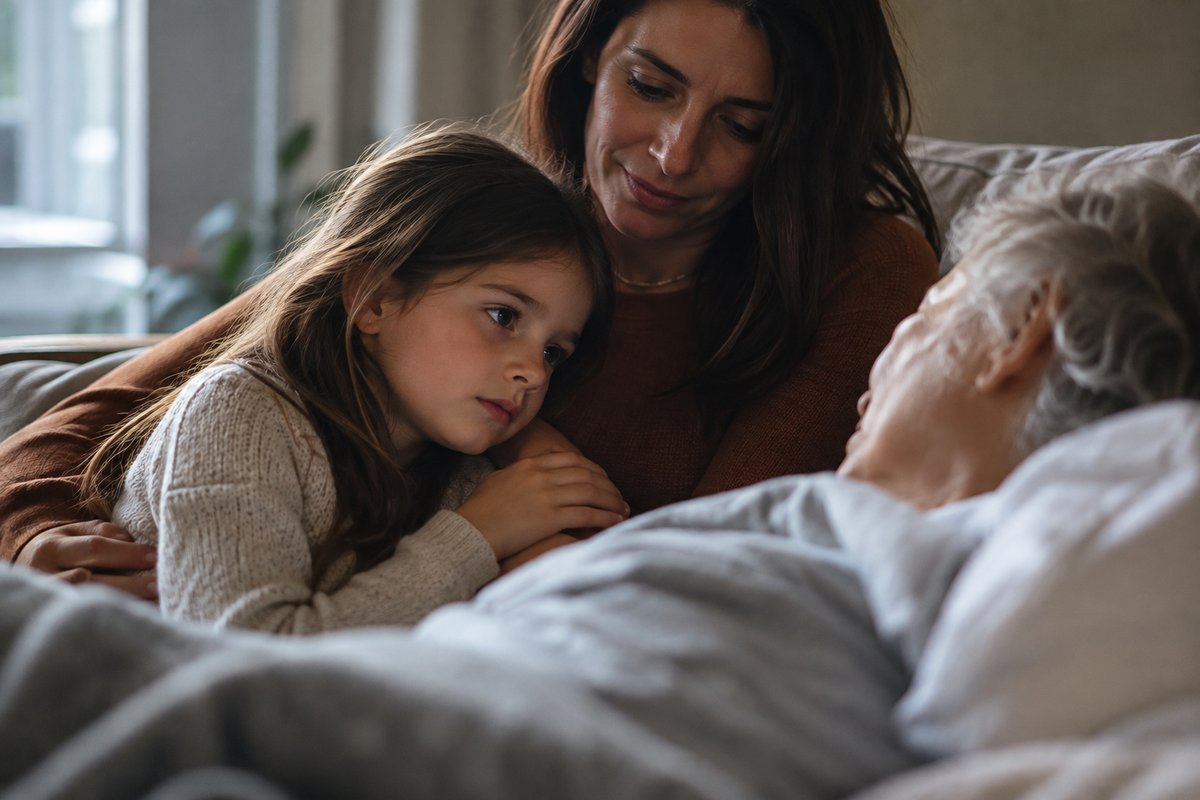
Helping young minds understand what adults wish were not true
Talking to Children About Terminal Illness: Children Know More Than We Think
When a serious illness enters a family, adults often try to protect children by avoiding difficult information. The instinct is loving — to preserve innocence, to prevent fear, to “keep things normal.” Yet children are highly sensitive to emotional shifts. They notice tension, whispers, hospital visits, and changes in routine. When they are not given explanations, they create their own — and these imagined explanations are often more frightening than reality.
Talking to children about terminal illness is not about removing sadness. It is about preventing loneliness inside that sadness. It allows children to feel included rather than confused.
Why Honesty Matters When Talking to Children About Terminal Illness
Children need truthful information that matches their developmental level. This does not mean overwhelming them with medical detail, but using clear, simple language. Euphemisms such as “going to sleep” or “going away” can create confusion or fear of ordinary experiences like sleep or separation.
Saying, “Grandma is very sick, and the doctors cannot make her body better,” gives clarity. It acknowledges reality while remaining gentle.
Honesty builds trust. Trust helps children feel safe even when circumstances are hard.
Following the Child’s Lead
Children process information differently than adults. They may ask a direct question and then return to play. This does not mean they do not care; it means they regulate emotions in manageable pieces.
Answer questions as they arise. Avoid giving more information than the child seeks at that moment. Repetition is normal; children revisit understanding gradually.
Naming Feelings
Children often experience emotions without knowing how to describe them. They may show sadness through irritability, clinginess, or physical complaints. Adults can help by naming emotions gently: “You might feel sad or confused. Those feelings make sense.”
Letting children know that all feelings are acceptable — sadness, anger, even moments of happiness — reduces guilt. Children often worry that feeling happy means they do not care.
Reassuring Without False Promises
Children’s biggest fear is often about security: Who will take care of me? What will change? Providing reassurance about routines and caregivers is essential. If changes will occur, describe them honestly.
Avoid promises you cannot keep. Instead of “Everything will be fine,” say, “We will be together, and we will take care of you.”
Maintaining Connection With the Ill Person
When possible, children benefit from continued contact with the ill family member, even if that contact looks different. Drawing pictures, short visits, or shared activities maintain connection and reduce fear of the unknown.
These moments become meaningful memories.
Allowing Grief to Be Visible
Adults sometimes hide their own sadness to protect children. While overwhelming emotional displays can be frightening, gentle expression of grief shows children that sadness is a natural response to loss.
Saying, “I feel sad because I love Grandpa,” teaches emotional honesty.
Rituals and Goodbye
When death is near, giving children the opportunity to say goodbye — in ways appropriate to their age — can be healing. After death, rituals such as funerals or family gatherings help children understand that the loss is real and shared.
Explaining what to expect during these events reduces anxiety.
Grief Is Not a Single Moment
Children grieve in waves. They may seem fine and then suddenly ask questions months later. Continue to make space for conversation. Grief evolves as children grow and understand more.
Conclusion
Talking to children about terminal illness is one of the hardest tasks for families. Yet inclusion, honesty, and emotional openness help children feel less alone in the experience. They do not need protection from sadness; they need protection from isolation.
In sharing this difficult truth, families also share love — and that love becomes the emotional ground children stand on, even after loss.
Comments are closed