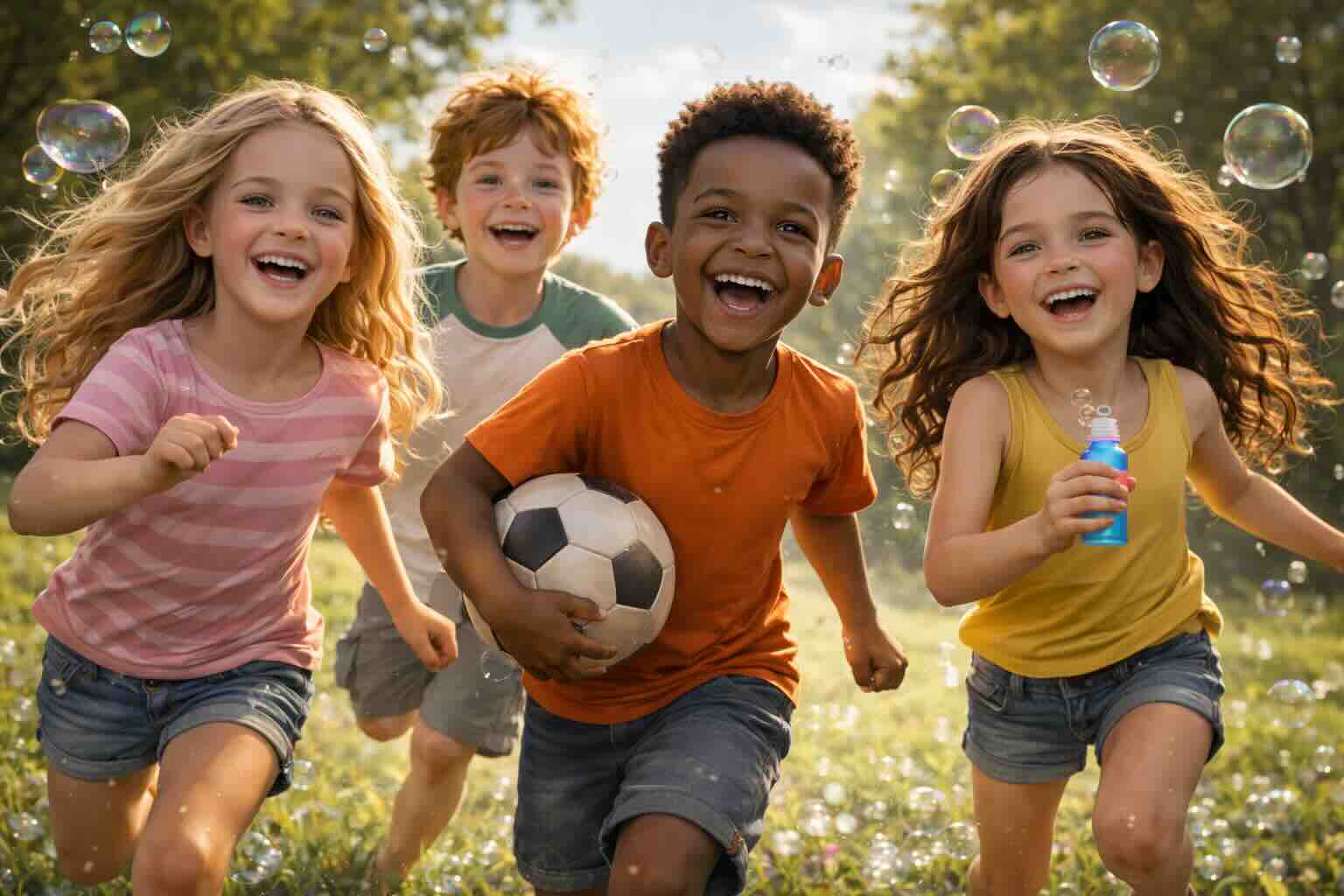
Play Is Not a Luxury
In a world increasingly focused on performance, achievement and early academic success, play can seem secondary. It is sometimes treated as a reward after “real work” is done. Yet from a developmental perspective, play is not a distraction from growth. It is the foundation of it.
For children, play is how they learn to think, to feel, to relate and to regulate. It is the natural language of childhood.
The Brain at Play
When children play, their brains are not idle. Neural networks are forming and strengthening. Executive functions—planning, flexibility, impulse control—are rehearsed in playful scenarios. A simple game of pretend shop involves memory, language, negotiation and emotional awareness.
Free play, especially unstructured play, stimulates creativity and problem-solving. When children invent rules, build imaginary worlds or solve conflicts within a game, they are exercising cognitive flexibility. They are learning to adapt.
Movement-based play also supports sensory integration and emotional regulation. The body in motion helps the nervous system organise itself.
Play is not the opposite of learning. It is learning embodied.
Emotional Expression Through Play
Children often lack the vocabulary to describe complex emotions. Through play, they express what they cannot articulate.
A child who has experienced stress may repeatedly act out rescue scenarios. A child navigating powerlessness may create games in which they are the hero. Through dolls, action figures or imaginary characters, children rehearse experiences and experiment with outcomes.
Play offers a safe symbolic space. It allows children to approach fear, anger or confusion indirectly, at a manageable distance.
In this way, play supports emotional processing and resilience.
Social Skills in Action
Peer play is a laboratory for social development. Within games, children negotiate rules, manage disagreements and experience inclusion and exclusion.
They learn how to read facial expressions, interpret tone and regulate impulses. They experience the pleasure of cooperation and the frustration of conflict.
These experiences build social competence far more effectively than lectures about behaviour.
Through play, children practise being part of a group.
The Role of Imagination
Imaginative play is particularly powerful. When a child pretends to be a teacher, doctor, superhero or animal, they experiment with identity. They try on roles. They explore agency and possibility.
Imagination expands psychological space. It allows children to think beyond immediate reality. It fosters flexibility, empathy and narrative thinking.
In adulthood, the capacity for creativity, innovation and problem-solving often traces back to a childhood rich in imaginative play.
Regulation and Stress Relief
Play also functions as a natural stress regulator. Laughter reduces tension. Physical movement discharges accumulated energy. Joyful interaction releases bonding hormones that enhance feelings of safety.
When play disappears and is replaced entirely by structured tasks and screen-based stimulation, children may become more irritable, restless or anxious.
The nervous system needs spontaneous, embodied engagement.
The Risk of Overscheduling
Modern childhood often includes tightly structured schedules—lessons, sports, tutoring, enrichment activities. While these can be beneficial, excessive structure can crowd out free play.
Free play is qualitatively different from organised activity. It is child-led. It allows boredom to evolve into creativity. It invites exploration without evaluation.
When every moment is supervised and goal-directed, children may lose opportunities to develop internal motivation and self-initiated problem-solving.
Play and Attachment
When parents engage in playful interaction—rough-and-tumble games, shared jokes, imaginative storytelling—they strengthen attachment bonds. Playful moments communicate safety and delight.
Through shared play, children feel seen not only for performance, but for presence. This emotional security supports broader development.
Play between parent and child is not frivolous. It builds relational trust.
Preparing for the Future
Ironically, the skills most valued in adulthood—adaptability, creativity, collaboration and emotional intelligence—are cultivated through play.
Play teaches children how to manage uncertainty, take manageable risks and recover from small failures. It builds frustration tolerance in a context that feels safe.
Children who play freely learn that the world is not only demanding, but also discoverable.
Protecting the Space for Play
Play does not require expensive toys or elaborate setups. It requires time, space and permission.
It requires adults who recognise that mess, noise and imagination are signs of development, not disorder.
In protecting play, we protect childhood itself.
Because when children play, they are not escaping reality. They are building the internal and relational capacities that will allow them to face it.
Comments are closed