More Than a Habit
We often speak about social media as an addiction, a distraction, a modern weakness. We criticise ourselves for scrolling, refreshing, checking again. We promise to reduce screen time. And yet, we return.
The question is not only why social media captures our attention. It is why it meets something in us so effectively.
Social media is not simply a technological platform. It is a psychological environment.
The Need to Be Seen
Human beings are relational. From infancy, we learn who we are by being mirrored in another’s gaze. A smile, a nod, a response—these signals shape identity.
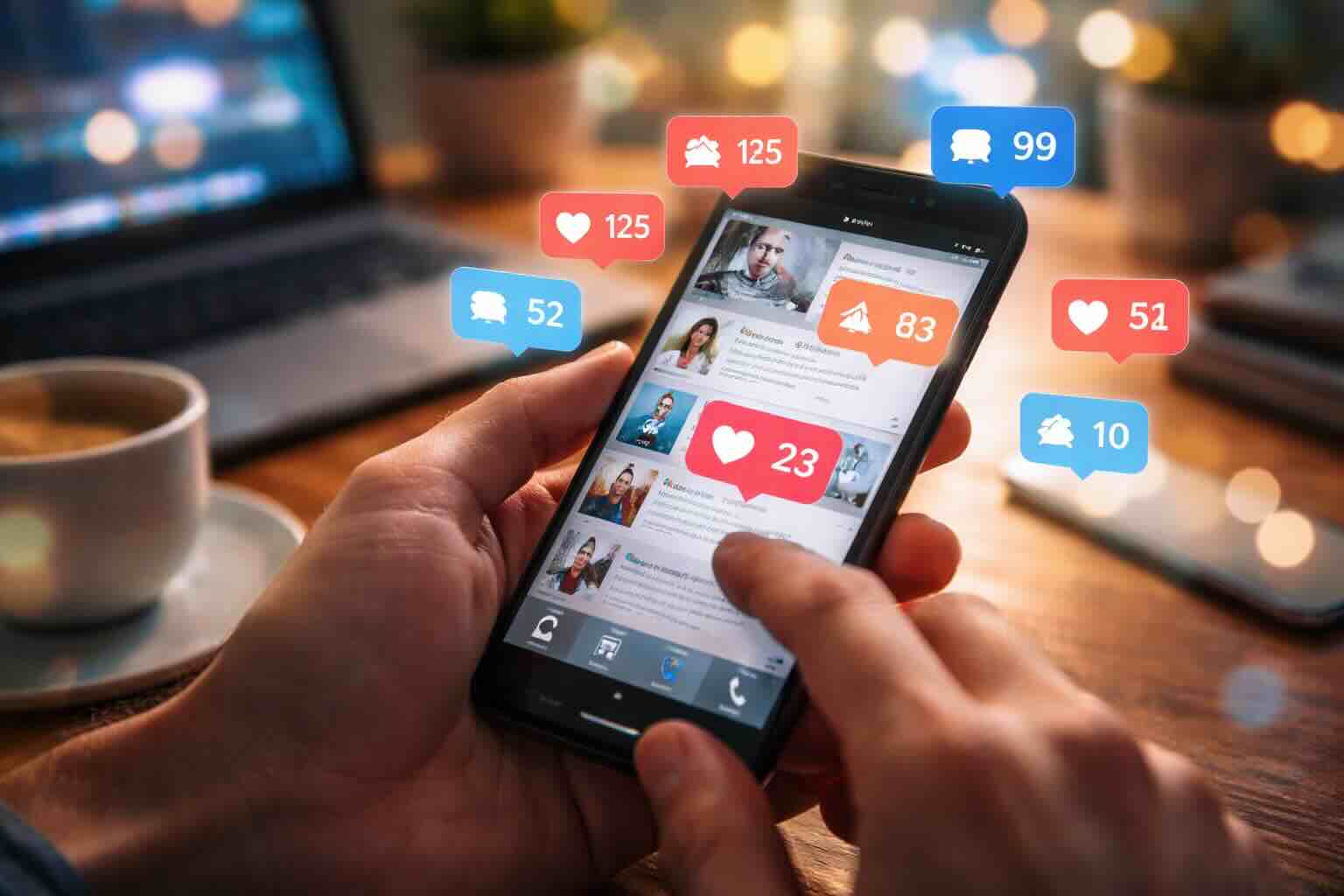
Social media amplifies this process. A post receives likes. A photo gathers comments. A story generates reactions.
Each notification functions as micro-validation.
It says: You are visible. You exist in the minds of others.
For a nervous system wired for belonging, that signal is powerful.
Belonging in a Fragmented World
Modern life is increasingly mobile and individualised. Extended families are dispersed. Communities are less geographically rooted. Work structures shift frequently.
Social media recreates the illusion of village life. We witness birthdays, achievements, opinions, daily routines. We remain connected to people we would otherwise lose.
It offers continuity in a world of fragmentation.
Even passive scrolling can produce a sense of ambient belonging.
Control and Curation
Offline, identity is negotiated in unpredictable ways. Online, it can be curated. We choose what to show. We filter, edit, delete.
This selective self-presentation offers a form of control. We can present competence on difficult days. We can share joy even when uncertain.
Control reduces anxiety.
The digital space becomes a place where we can manage how we are perceived.
The Dopamine Loop
Social media platforms are not neutral. They are designed to retain attention. Variable rewards—unpredictable notifications, intermittent feedback—activate dopamine pathways associated with anticipation and reward.
The brain learns quickly. Check. Refresh. Anticipate.
The behaviour repeats not because we are weak, but because the system leverages fundamental learning mechanisms.
Biology meets design.
Avoidance and Numbing
Social media also offers escape. When emotions feel overwhelming—loneliness, boredom, stress—scrolling provides distraction.
It fills silence. It postpones reflection.
Like any coping mechanism, it can regulate temporarily. The problem arises when it replaces rather than supplements direct emotional processing.
The screen absorbs what the psyche does not want to face.
Comparison and Identity
We also turn to social media to locate ourselves socially. Humans are naturally comparative. We measure our status, success and belonging relative to others.
Online platforms intensify this instinct. We compare bodies, careers, relationships and lifestyles against curated representations.
The comparison may increase insecurity, but it also feeds a desire to orient ourselves.
Where do I stand?
Am I doing enough?
Do I fit?
These are ancient social questions expressed through modern tools.
The Fear of Missing Out
Another powerful driver is anticipation. What is happening without me? What conversation am I absent from?
In ancestral environments, missing social information could have consequences. Today, that instinct translates into fear of missing out.
We check not only for pleasure, but for reassurance that we are not excluded.
When Need Becomes Excess
Needing social media is not inherently pathological. It reflects legitimate psychological needs: connection, visibility, stimulation, belonging.
Problems arise when the digital substitute crowds out embodied experience. When online validation replaces offline intimacy. When comparison erodes self-worth.
The issue is rarely the platform itself, but imbalance.
The Mirror of Ourselves
Ultimately, social media reveals our relational nature. It exposes how much we depend on recognition and narrative.
We do not need social media because we are shallow. We need it because we are social.
The task is not elimination, but awareness. To ask, before opening the app: What am I looking for right now? Connection? Distraction? Affirmation?
When we understand the need beneath the behaviour, the compulsion softens.
Because what we truly seek is not the screen. It is to feel that we matter in the minds of others.
And that need is far older than the internet.
Comments are closed