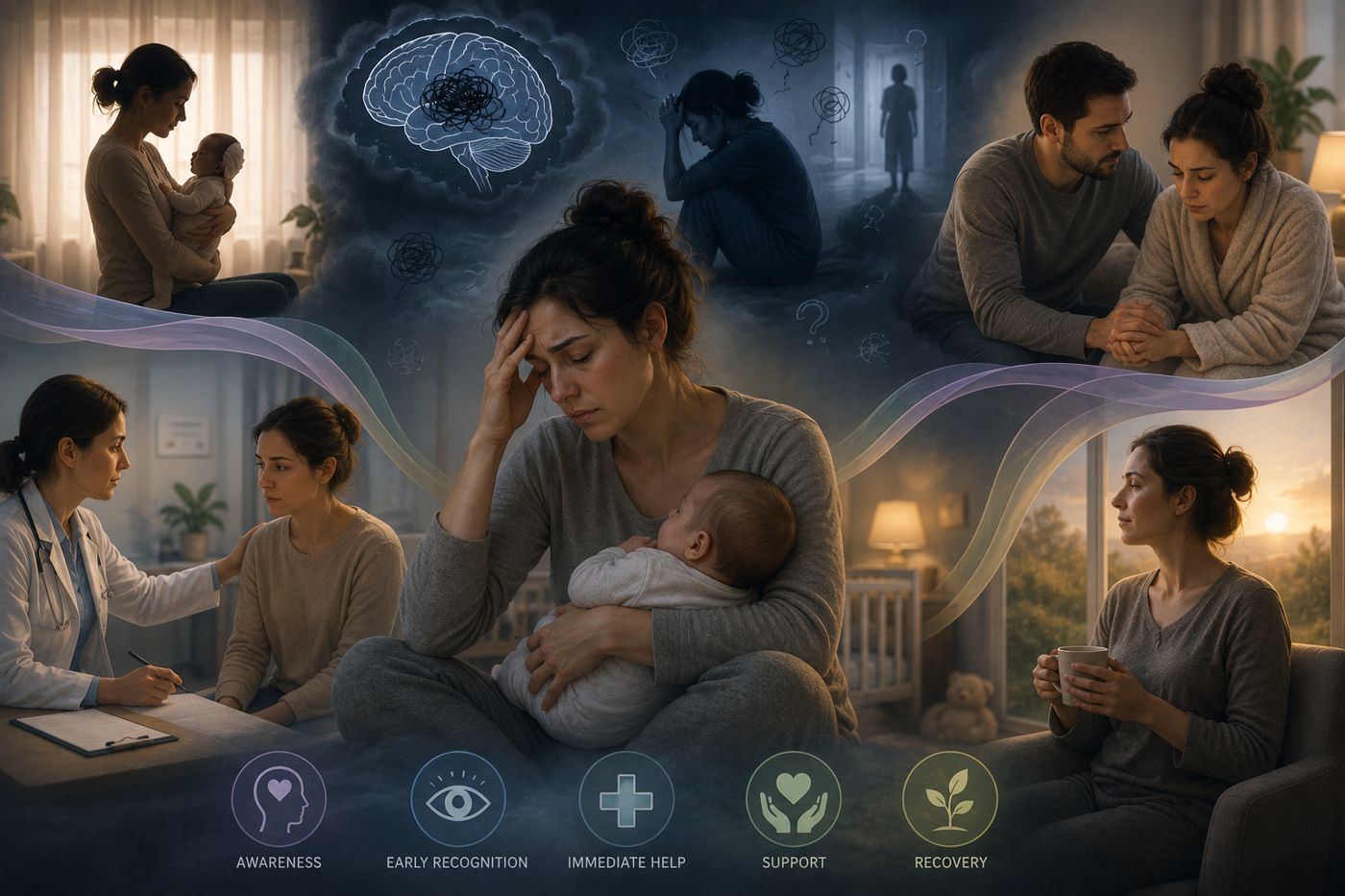
Understanding a rare but serious mental health emergency after childbirth
When the Postpartum Period Becomes a Psychological Crisis
The weeks and months following childbirth are often described as a time of bonding, adjustment, and emotional intensity. Fatigue, mood changes, and vulnerability are common as a woman recovers physically and adapts psychologically to motherhood. However, in rare cases, the postpartum period can bring not only emotional strain but a severe psychiatric condition known as postpartum psychosis.
Postpartum psychosis is not an extension of typical “baby blues” or even standard postpartum depression. It is a medical and psychiatric emergency that requires immediate professional care. Despite its seriousness, it is still poorly understood outside clinical settings, and myths or silence can prevent early recognition.
Understanding postpartum psychosis means approaching the topic with clarity, without fear-based exaggeration, and without stigma. It is a condition that arises not from weakness or lack of love for the baby, but from a complex interaction of biological and psychological factors during a period of profound change.
A Sudden Shift in Mental State
Postpartum psychosis usually develops rapidly, often within the first days or weeks after birth. A woman who seemed well may begin to show dramatic changes in thinking, mood, perception, and behavior. These changes go beyond normal emotional fluctuation.
She may experience confusion, disorientation, extreme mood swings, or a sense that reality feels altered. Thoughts may become unusual, rigid, or disconnected from reality. Sleep disturbances can be severe, not just due to caring for a newborn but because the mind cannot settle. She may appear intensely agitated or, conversely, withdrawn and internally preoccupied.
These symptoms are not under voluntary control. They reflect a state in which the mind’s usual integration of thoughts, emotions, and perception is disrupted.
Why This Period Is Vulnerable
Childbirth is one of the most significant biological transitions in a woman’s life. Hormone levels shift dramatically. Sleep becomes fragmented. Physical recovery is underway. Emotional and relational demands increase. The identity shift into motherhood can be psychologically profound.
For women with a personal or family history of bipolar disorder, psychosis, or severe mood disorders, the risk is higher. However, postpartum psychosis can sometimes appear without previous diagnosis.
The condition is rare, but because of its severity, awareness is essential.
What Makes It Different From Depression
Postpartum depression involves persistent low mood, loss of pleasure, fatigue, guilt, or anxiety. Postpartum psychosis involves a break from reality. The woman may hold beliefs that are clearly untrue, misinterpret events in extreme ways, or respond to internal experiences as if they were external.
These symptoms are frightening for families. They can also be terrifying for the woman herself, who may feel confused or overwhelmed by her own thoughts.
This is not a matter of willpower or perspective. It is a psychiatric emergency requiring professional intervention.
The Role of Immediate Help
When postpartum psychosis is suspected, urgent medical and psychiatric evaluation is necessary. Early treatment significantly improves outcomes. Care may involve medication, hospital support, and coordinated follow-up. Safety for both mother and baby must be ensured.
Families often feel shock, fear, and helplessness. Yet timely care allows recovery. Many women who experience postpartum psychosis, with appropriate treatment, return to stable mental health.
The Emotional Impact on the Mother
Women who recover from postpartum psychosis often describe confusion and distress about the experience. They may feel guilt or shame, fearing judgment. It is crucial to emphasize that this condition is not a reflection of character, parenting capacity, or love.
Compassionate support during recovery helps restore confidence and emotional stability.
The Importance of Reducing Stigma
Silence around severe postpartum mental health conditions can delay recognition. Talking openly and responsibly about postpartum psychosis allows families to seek help without shame. Awareness does not create fear; it creates preparedness.
Pregnancy and childbirth involve profound change. Recognizing that mental health can be affected in serious ways is part of holistic care.
Recovery and Support
With treatment, support, and follow-up care, recovery is possible. The postpartum period is already emotionally intense; experiencing psychosis can add layers of vulnerability. Ongoing psychological support helps women process the experience and rebuild a sense of safety.
Partners and families also benefit from guidance, as they may carry emotional shock from the crisis.
Conclusion
Postpartum psychosis is rare but serious. It is a medical and psychological emergency, not a personal failure. Early recognition and intervention save lives and support recovery.By approaching this topic with compassion, clarity, and without stigma, we create conditions where women and families can seek help quickly and feel supported through a frightening experience.
Comments are closed