Introduction
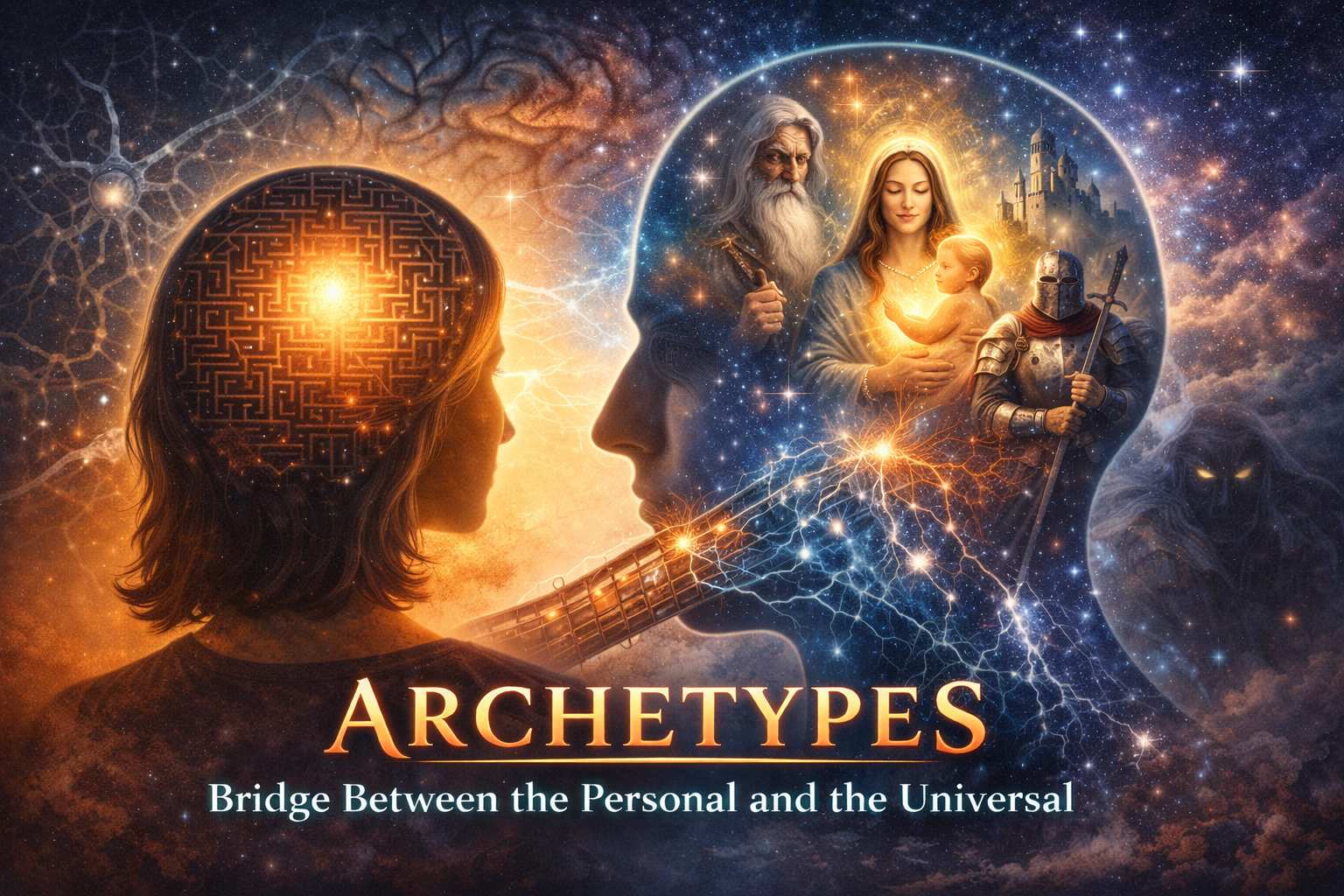
Archetypes―universal, primordial patterns of thought and behavior―form the bedrock of archetypal psychology. First articulated by Carl Gustav Jung, archetypes dwell in the collective unconscious, an inherited layer of the psyche shared across humanity. They shape myths, dreams, art, and cultural rituals, providing a bridge between our personal experiences and the larger, timeless narratives of the human spirit.
Case Vignette:
Maria, a 35-year-old teacher, repeatedly dreams of crossing a desert at dusk in search of an oasis. Though her daytime life is stable, she feels an inexplicable restlessness and longing for something “just out of reach.” In therapy, Maria learns that the Desert Wanderer archetype symbolizes her current inner journey: a period of transition between one life chapter and the next.
1. Defining Archetypes
1.1. Archetypes as Transpersonal Structures
- Not Personal Memories: Unlike personal complexes—clusters of feelings and memories around a particular event—archetypes are inherited predispositions to form certain imagery and motifs.
- Evolutionary Roots: Neuroscience suggests that shared neural pathways underlie basic emotional responses (fear, nurturing, play), supporting the notion of inborn patterns.
1.2. Tendency, Not Content
- Pattern Over Picture: The Mother archetype represents the inclination toward care and nourishment. In one culture it may appear as Gaia, in another as Kwan Yin—specific forms differ, but the function remains constant.
- Flexible Manifestation: Archetypes emerge in dreams, artistic creations, and personal fantasies—always shaped by the individual’s context, culture, and life stage.
Clinical Note: When clients present recurring symbols (water, towers, journeys), explore the archetypal theme (transformation, protection, quest) rather than fixating on a single interpretation.
2. Functions of Archetypes
2.1. Organizing Experience
- Meaning‐Making Templates: Archetypes act like mental “subroutines,” helping us categorize life events. Encountering a mentor figure often triggers the Wise Old Man or Inner Teacher archetype, opening us to guidance.
- Predictable Stages: Mythic sequences—such as the Hero’s Journey—map onto personal transitions, from departure (leaving home) to initiation (facing trials) to return (integrating lessons).
2.2. Guiding Growth
- Developmental Compass: During adolescence, the Shadow archetype may surface, compelling individuals to confront disowned aspects (anger, envy).
- Crisis and Renewal: Midlife often summons the Seeker or Wanderer, signaling a need to reassess values and life direction.
Case Example:
Thomas, 45, reports a sudden urge to take a six-month sabbatical. His dreams of “crossing mountains” correspond to the Seeker archetype, indicating a developmental push toward new horizons.
3. Archetypes in Everyday Life
3.1. Dreams
- Nighttime Theater: Dreams often present archetypal figures—dragons, generous strangers, dark forests—calling attention to inner processes.
- Active Imagination: Clients can dialogue with dream figures, eliciting insights from the archetypal realm.
3.2. Art and Media
- Cultural Resonance: Blockbuster films (e.g., Star Wars) rely on archetypal structures—the orphan hero, the benevolent mentor, the trickster ally.
- Personal Creativity: In art therapy, clients create mandalas (the Self archetype) or dragon images (the Shadow) to visualize inner dynamics.
4. Archetypes as Healing Pathways
4.1. Projection and Integration
- Projection Awareness: Individuals often project disowned traits onto others (“That coworker is so ruthless”); identifying the projection reveals the Shadow within.
- Integration Work: Through naming and owning these projections, clients reclaim parts of themselves, fostering psychic wholeness.
4.2. Symbolic Dialogue
- Active Imagination Technique:
- Invite the client to visualize an archetypal figure (e.g., the Great Mother).
- Facilitate a two-way conversation: client asks questions; the figure responds symbolically.
- Reflect on the dialogue for personal meaning and guidance.
5. Practical Take‐Aways for Clinicians
- Listen for Recurring Motifs: Note themes—journeys, battles, births—that hint at archetypal processes.
- Use Amplification: Ground individual symbols in mythological, literary, or cultural parallels to deepen understanding.
- Foster Creative Expression: Encourage art, writing, or movement to let archetypal energies express themselves.
- Balance Structure with Openness: Provide clear framework for archetypal work (e.g., guided imagery scripts), yet allow spontaneous emergence of symbols.
- Monitor Client Readiness: Archetypal depths can be intense; ensure clients have adequate ego strength and support before deep work.
Conclusion
Archetypes offer a universal language that bridges personal experience and collective heritage. For clients navigating transitions, dilemmas, or dissociation, archetypal psychology provides maps, metaphors, and methods that engage the whole psyche—mind, body, and soul. Integrating archetypes into therapy not only enriches the clinical process but also reconnects individuals with the timeless stories that shape human destiny.
Comments are closed